An archive of process by artists living with disabilities, remaking tech through the lens of access.
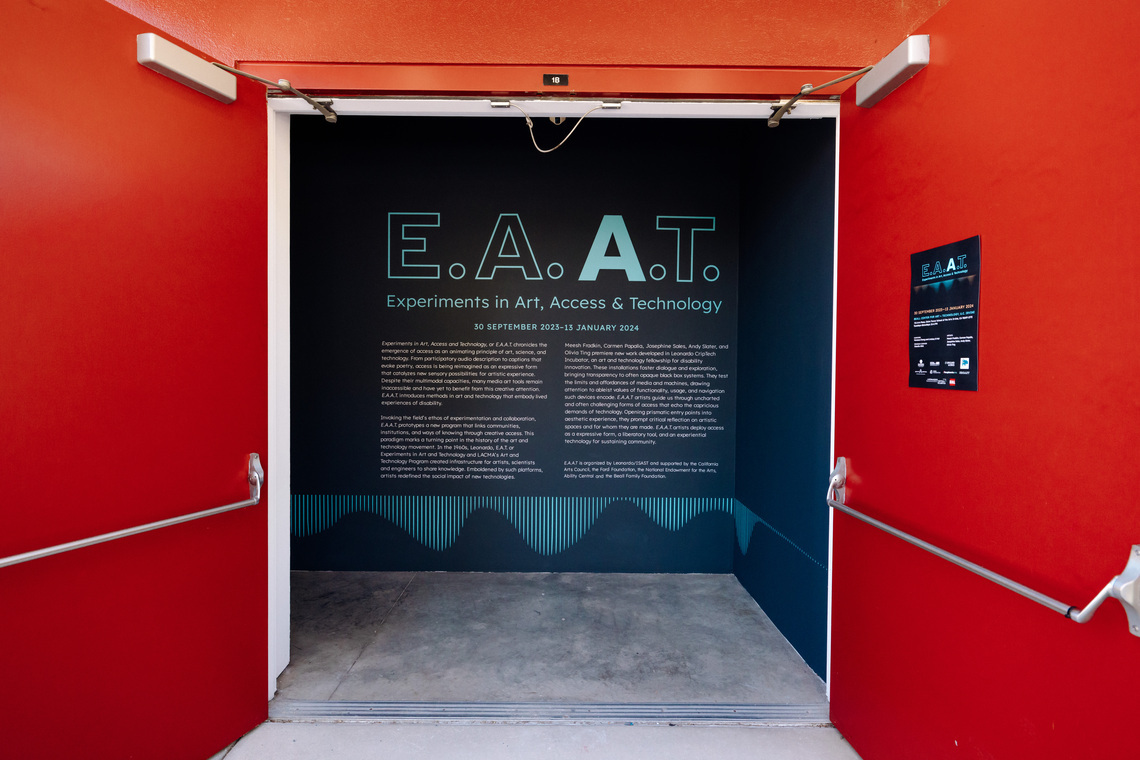
Recording CripTech is an archive of the work of five disabled artists in the Leonardo CripTech Incubator. The work was exhibited in a show called E.A.A.T.: Experiments in Art, Access and Technology.
Artists in residence
The archive contains artifacts of the artists’ creative, collaborative processes during the Leonardo/ISAST CripTech Incubator, as well as glimpses of the final products exhibited in E.A.A.T. The artists have chosen a range of artifacts—images, sound, and video—and many have explanatory notes.
Access
Access is the design process of the archive itself
Access isn't an afterthought here — it shapes how the whole archive is built. Explore the work on your own terms, through the forms each artist chose.
How access works- Access experiment Lip Reading - Interactive Flowchart Lip Reading Interactive reimagines Olivia Ting's original gallery flowchart as an accessible interactive web experience. You can navigate the decision tree online, including through screen readers, preserving the exploratory, choice-driven experience of the printed flowchart displayed at the E.A.A.T exhibition for blind and low-vision audiences online.
- Access experiment Babbel Player Babbel is an accessible, self-paced interactive explorations of the audio used in Meesh Sara Fradkin's voice-activated sculpture, babbel. Visitors can explore fifteen words, each paired with the sound it triggered in the sonic sculpture along with a description of that sound.
- Access experiment Total Running Time Site Total Running Time Site is an accessible digital companion to the Total Running Time exhibition, extending the project beyond the gallery. Through documentation, contextual materials, and interactive content, the site invites visitors to explore the exhibition’s themes of care, disability, incarceration, labor, and time at their own pace, supporting both remote and ongoing engagement with the work.
The exhibition
There is a lot of material in the archive. A good starting point is to get a broad view of the E.A.A.T. exhibit or digging into the work of a single artist above.
E.A.A.T. Experiments in Art, Access and Technology
The culminating exhibition of the fellowship program, shown at Beall Center for Art + Technology (Sept 23–Jan 24).
Ways to use the archive
Much of this media is Creative Commons and available for re-use. This makes it a resource for:
- Scholars and others who are interested in disability art-making, art history, disability studies, and related topics can use it to explore these artists’ processes.
- Educators can use the archive for teaching and learning about those topics as well.
From the archive
Unseen Sound Video Play-through
A video play through of Andy Slater's Unseen Sound — spatial audio remapped as a wayfinding tool through real and virtual space.
View this item