Container · 15 items
Video development: Visual translation of signing and conducting
These are examples of raw footage that I started with, and then the heavily digitized and manipulated video that you see later. I just wanted to make a point that they come from actual people signing and moving; these are from a human source as opposed to CGI or anything. The way the video is manipulated, I was really intrigued by the idea of echoes, or the connecting of these echos like a trail of energy. Like if you move your hand across, you disturb all these molecules—if you could see those molecules and the trails, what would that calligraphy look like? I recruited two people: my friend who is a conductor, and a dancer who is hard of hearing, so she is fluent in American Sign Language. These are both representatives of the kind of movements and languages that I wanted to explore: music conducting and American Sign Language. The source of these two different types of movements is Beethoven’s Ode to Joy Symphony. I reference Beethoven because this symphony was the last large-scale piece he composed, and he was completely deaf. This particular movement has instrumental music and vocals set to a poem by Friedrich Schiller. The conductor is conducting the instrumental and the signer is signing the words, so there are two aspects of sound that make up this work.
Archive items in Video development: Visual translation of signing and conducting
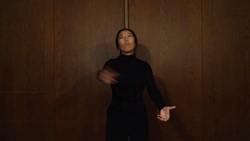
Image · CC-BY (CC-Attribution) · View Item: Conductor’s expressive gesture (3)
Conductor’s expressive gesture (3)
A conductor conducting Beethoven’s “Ode to Joy” symphony. Their gestures captured in photographs became source material for Ting’s exploration of the trails of energy left behind by movement.
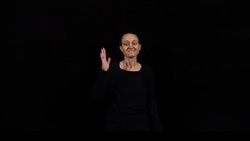
Image · CC-BY (CC-Attribution) · View Item: ASL expressive gesture (2)
ASL expressive gesture (2)
A dancer uses ASL to sign the words of Schiller’s poem that are set to music in Beethoven’s “Ode to Joy” symphony. Their gestures captured in photographs became source material for Ting’s exploration of the trails of energy left behind by movement.
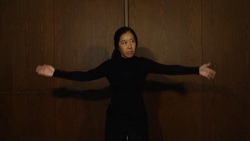
Image · CC-BY (CC-Attribution) · View Item: Conductor’s expressive gesture (2)
Conductor’s expressive gesture (2)
A conductor conducting Beethoven’s “Ode to Joy” symphony. Their gestures captured in photographs became source material for Ting’s exploration of the trails of energy left behind by movement.
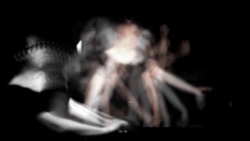
Image · CC-BY (CC-Attribution) · View Item: Montaged with other images to form a visual conversation (1)
Montaged with other images to form a visual conversation (1)
Combining several digitally manipulated images creates a visual conversation.
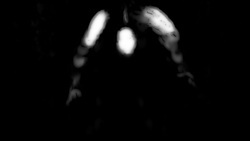
Image · CC-BY (CC-Attribution) · View Item: Extension of movements into gesture calligraphy (2)
Extension of movements into gesture calligraphy (2)
Digitally manipulated photography transforms the trail of energy left behind by human movement into a sort of calligraphy.
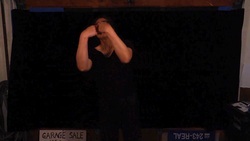
Image · CC-BY (CC-Attribution) · View Item: ASL expressive gesture (3)
ASL expressive gesture (3)
A dancer uses ASL to sign the words of Schiller’s poem that are set to music in Beethoven’s “Ode to Joy” symphony. Their gestures captured in photographs became source material for Ting’s exploration of the trails of energy left behind by movement.
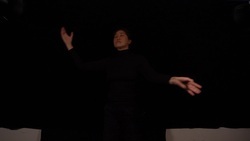
Image · CC-BY (CC-Attribution) · View Item: Conductor’s expressive gesture (1)
Conductor’s expressive gesture (1)
A conductor conducting Beethoven’s “Ode to Joy” symphony. Their gestures captured in photographs became source material for Ting’s exploration of the trails of energy left behind by movement.
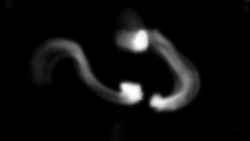
Image · CC-BY (CC-Attribution) · View Item: Montaged with other images to form a visual conversation (2)
Montaged with other images to form a visual conversation (2)
Combining several digitally manipulated images creates a visual conversation.
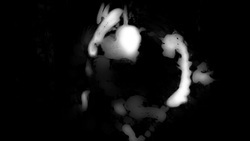
Image · CC-BY (CC-Attribution) · View Item: Extension of movements into gesture calligraphy (1)
Extension of movements into gesture calligraphy (1)
Digitally manipulated photography transforms the trail of energy left behind by human movement into a sort of calligraphy.
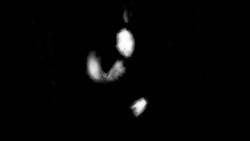
Image · CC-BY (CC-Attribution) · View Item: Extension of movements into gesture calligraphy (3)
Extension of movements into gesture calligraphy (3)
Digitally manipulated photography transforms the trail of energy left behind by human movement into a sort of calligraphy.
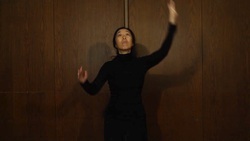
Image · CC-BY (CC-Attribution) · View Item: Conductor’s expressive gesture (4)
Conductor’s expressive gesture (4)
A conductor conducting Beethoven’s “Ode to Joy” symphony. Their gestures captured in photographs became source material for Ting’s exploration of the trails of energy left behind by movement.
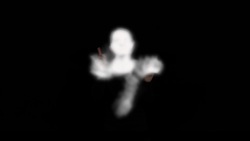
Image · CC-BY (CC-Attribution) · View Item: Montaged with other images to form a visual conversation (4)
Montaged with other images to form a visual conversation (4)
Combining several digitally manipulated images creates a visual conversation.
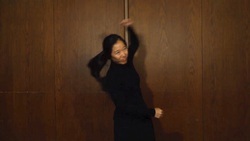
Image · CC-BY (CC-Attribution) · View Item: Conductor’s expressive gesture (5)
Conductor’s expressive gesture (5)
A conductor conducting Beethoven’s “Ode to Joy” symphony. Their gestures captured in photographs became source material for Ting’s exploration of the trails of energy left behind by movement.
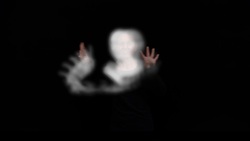
Image · CC-BY (CC-Attribution) · View Item: Montaged with other images to form a visual conversation (3)
Montaged with other images to form a visual conversation (3)
Combining several digitally manipulated images creates a visual conversation.
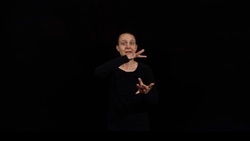
Image · CC-BY (CC-Attribution) · View Item: ASL expressive gesture (1)
ASL expressive gesture (1)
A dancer uses ASL to sign the words of Schiller’s poem that are set to music in Beethoven’s “Ode to Joy” symphony. Their gestures captured in photographs became source material for Ting’s exploration of the trails of energy left behind by movement.